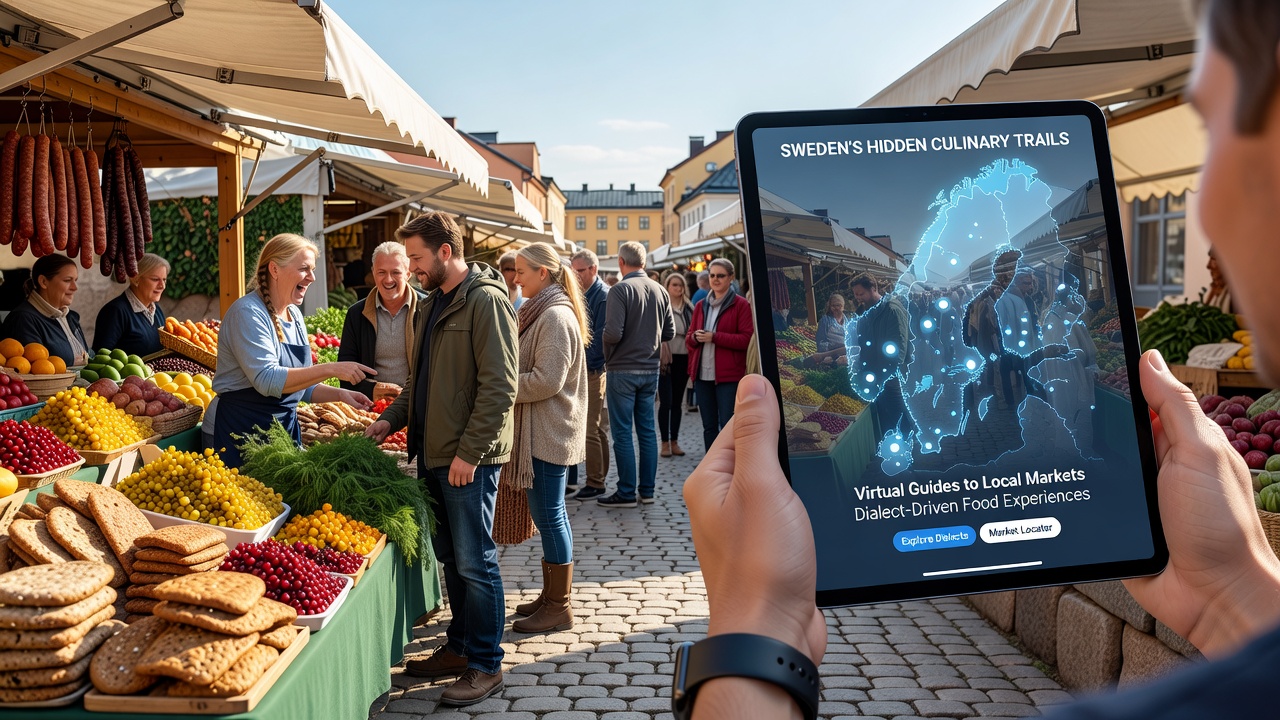
Sweden's Hidden Culinary Trails: Virtual Guides to Local Markets and Dialect-Driven Food Experiences
Virtual platforms have expanded access to Sweden's lesser-known food markets where regional dialects shape menu descriptions and ingredient names in ways that standard translation tools often overlook. Travelers use these digital resources to connect with producers in areas such as Dalarna and Småland, where terms for preserved meats and berry preparations carry distinct local pronunciations and historical references. Data from the Swedish National Heritage Board shows that over 120 small-scale markets operate year-round with participation from dialect-speaking vendors who maintain traditional naming practices.
Virtual Platforms Connecting Markets and Travelers
Online interfaces aggregate listings from inland and forest-adjacent markets that rarely appear in mainstream tourism materials, allowing users to filter by dialect region and seasonal availability. These systems incorporate audio clips of vendors explaining items like "palt" or "kroppkakor" using pronunciations specific to Västerbotten or Norrland dialects. Researchers at Uppsala University have documented how such audio features preserve linguistic variations that date back to 19th-century trade routes across the Scandinavian peninsula.
Users access interactive maps that highlight stalls offering cloudberry preserves or smoked fish prepared according to methods tied to specific parish vocabularies. September 2026 will see the rollout of updated route layers covering newly digitized trails in Jämtland, where virtual guides will integrate live dialect recordings from market days. Government statistics indicate that participation in these virtual programs grew by 34 percent between 2023 and 2025, driven by increased interest in linguistic heritage tied to food production.
Dialect Influences on Food Terminology and Experiences
Dialect-driven food experiences emerge when travelers follow virtual prompts that explain how local speech patterns affect recipe instructions and product labeling. In Östergötland, for instance, the word for a particular rye flatbread varies between communities, and digital guides provide side-by-side comparisons that reveal these shifts. Observers note that such details help participants understand why certain preservation techniques receive different names even within short geographic distances.
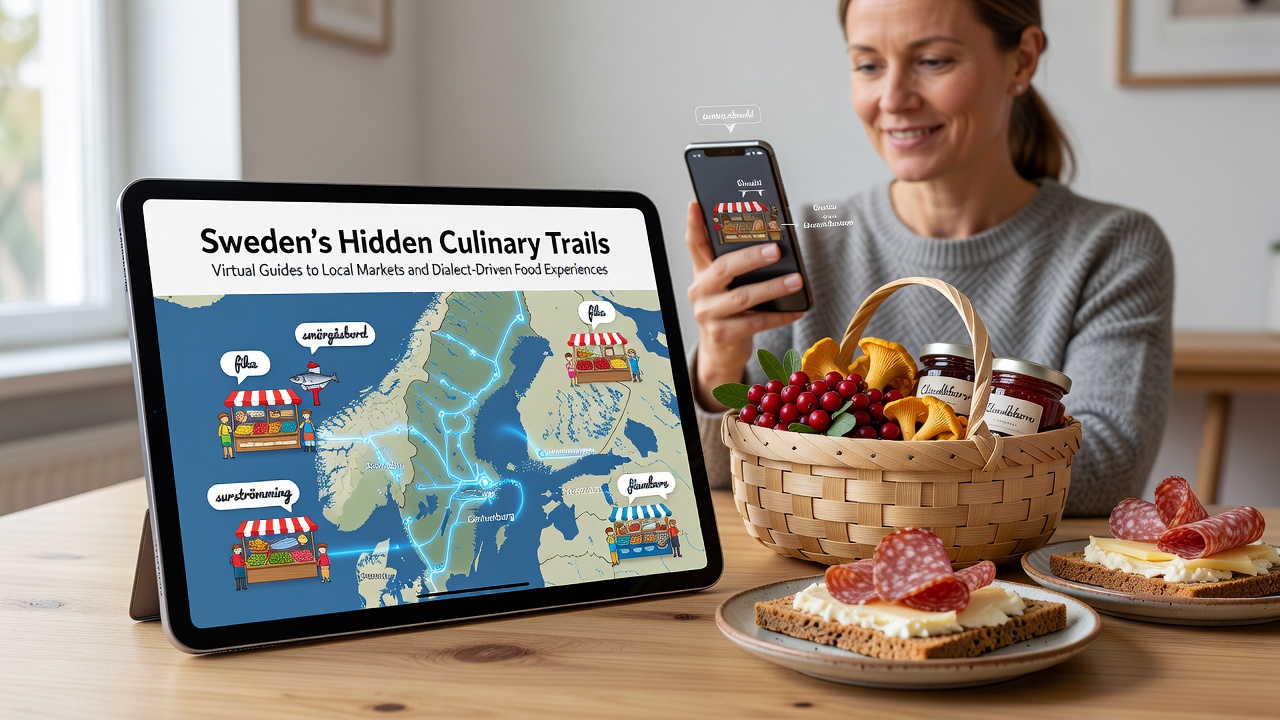
Virtual modules pair market visits with recordings of conversations in which sellers describe fermentation processes using vocabulary rooted in older farming communities. Studies conducted by the European Institute for Cultural Heritage indicate that these dialect layers influence how consumers perceive flavor profiles and authenticity claims. Travelers who engage with the guides report learning distinctions between "surströmming" variants that carry different connotations depending on the coastal or inland dialect used at each stall.
Regional Market Examples adn Digital Integration
Markets in Värmland feature virtual tours that spotlight dialect-specific cheese aging terminology, while platforms link users directly to producers who maintain family recipes passed down through generations. One documented case involves a cooperative in Arvika where guides explain how local speech patterns distinguish between fresh and aged varieties of "getost." Figures from Statistics Sweden reveal that small markets in these areas recorded a 22 percent increase in direct sales through digital booking systems during the previous two years.
Additional trails cover Gotland markets where dialect terms for lamb preparations appear in virtual annotations, connecting users with workshops that demonstrate salting methods described in local vernacular. These resources draw from archives maintained by regional folklore societies that have cataloged food-related vocabulary since the mid-20th century. The integration of such material into mobile applications allows real-time translation overlays during physical visits, reducing barriers for those unfamiliar with the linguistic nuances.
Expansion Plans for 2026 and Beyond
Plans announced by cultural agencies include expanded coverage of dialect maps for markets in Lapland, where Sami-influenced terminology intersects with Swedish regional variants in descriptions of reindeer-based products. September 2026 marks the scheduled release of new virtual modules that incorporate user-submitted recordings, building on existing frameworks already used in Dalarna. External evaluations from the Nordic Council of Ministers confirm that these additions will cover an estimated 45 additional market locations previously undocumented in digital form.
Linkages between virtual guides and physical markets continue to develop through partnerships with local chambers of commerce, ensuring that updates reflect current vendor participation and seasonal offerings. Data collected through these networks shows consistent growth in cross-regional food tourism that centers on linguistic elements rather than solely visual or taste-based attractions.
Conclusion
Virtual guides to Sweden's hidden culinary trails provide structured access to markets where dialect variations shape both product names and preparation narratives. Continued development of these resources through 2026 will further connect users with regional terminology and vendor practices across multiple provinces. The combination of digital tools and documented linguistic data supports sustained interest in these specialized food experiences.