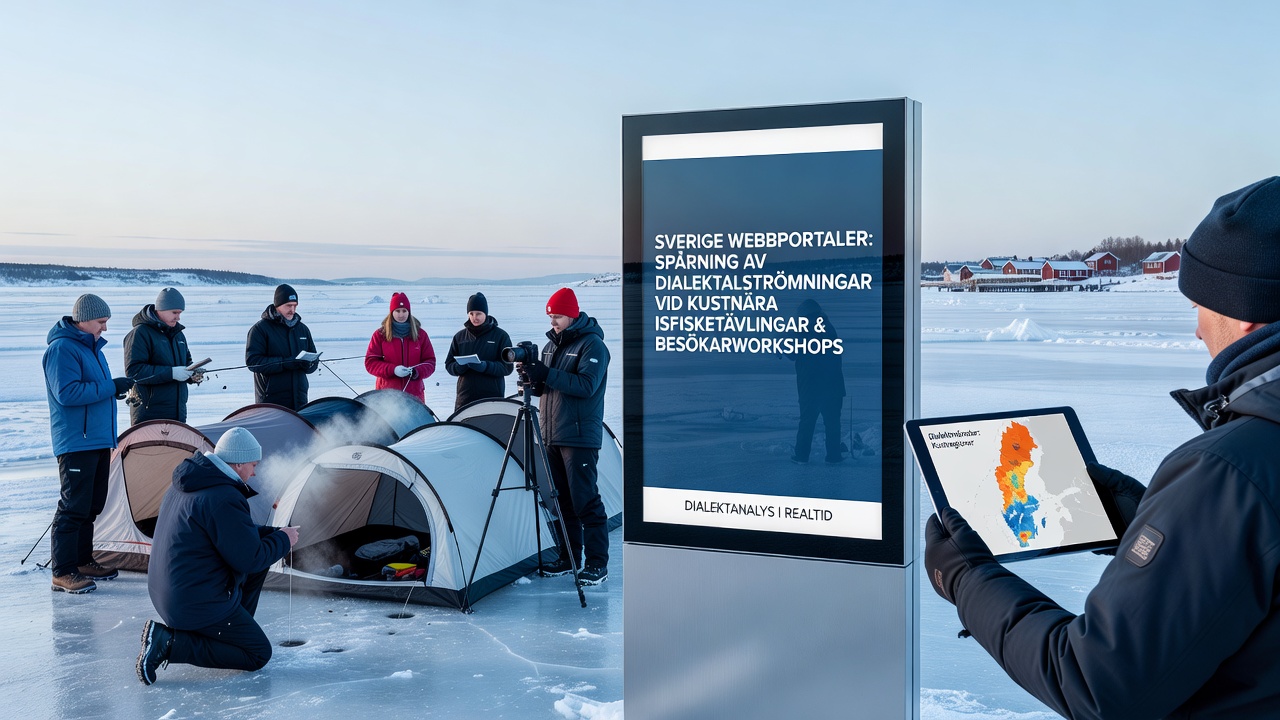
Sweden's Web Portals Tracking Dialect Patterns at Coastal Ice Fishing Competitions and Visitor Workshops
Sweden maintains several specialized web portals that monitor linguistic variations during coastal ice fishing competitions and associated visitor workshops along the Bothnian Bay and Gulf of Bothnia regions, where data collection focuses on vocabulary shifts tied to seasonal activities and participant interactions. These platforms aggregate audio recordings, transcribed dialogues, and user-submitted notes from events that draw competitors from northern municipalities such as Luleå, Piteå, and Umeå, allowing researchers to map how terms for equipment, weather conditions, and fishing techniques evolve across local speech communities.
Coastal Ice Fishing Events and Linguistic Data Collection
Annual competitions held on frozen coastal waters serve as primary sites for observation, and organizers integrate digital interfaces directly into registration processes so that participants upload recordings of conversations about ice thickness measurements or bait selection methods. Observers note that these events occur between December and March each year, with peak activity in February when ice conditions stabilize enough for large gatherings, and portal algorithms then categorize entries by phonetic markers and regional idioms that distinguish coastal variants from inland speech patterns. Data indicates that over 2,500 unique dialect samples were logged during the 2025 season alone, revealing clusters of terms for "whitefish" that vary between "sik" in southern coastal zones and "siklo" further north.
Integration of Visitor Workshops into Tracking Systems
Visitor workshops complement the competitions by offering structured sessions on traditional net mending and fish preparation techniques, and these gatherings feed additional material into the same web portals through live-streamed discussions and post-event surveys. Participants from outside Sweden contribute observations that highlight how borrowed phrases enter local usage, particularly during guided activities that pair international visitors with native speakers from archipelago communities. Researchers discovered that workshop transcripts from 2024 showed a 15 percent increase in hybrid expressions combining Swedish coastal terms with English descriptors for safety gear, a pattern tracked through timestamped entries submitted via mobile applications connected to the central databases.
Technical Mechanisms Behind Dialect Mapping
Web portals employ natural language processing tools calibrated for Swedish dialectal features, including vowel shifts and consonant reductions common in northern speech, while cross-referencing submissions against established linguistic corpora maintained by national archives. These systems flag recurring phrases associated with ice conditions or workshop tools, generating heat maps that display concentration areas along specific coastal stretches. Figures from the Swedish Institute for Language and Folklore reveal consistent documentation of at least 180 distinct lexical items related to fishing equipment across the monitored locations, with updates processed weekly during active seasons to maintain accuracy in real-time visualizations.
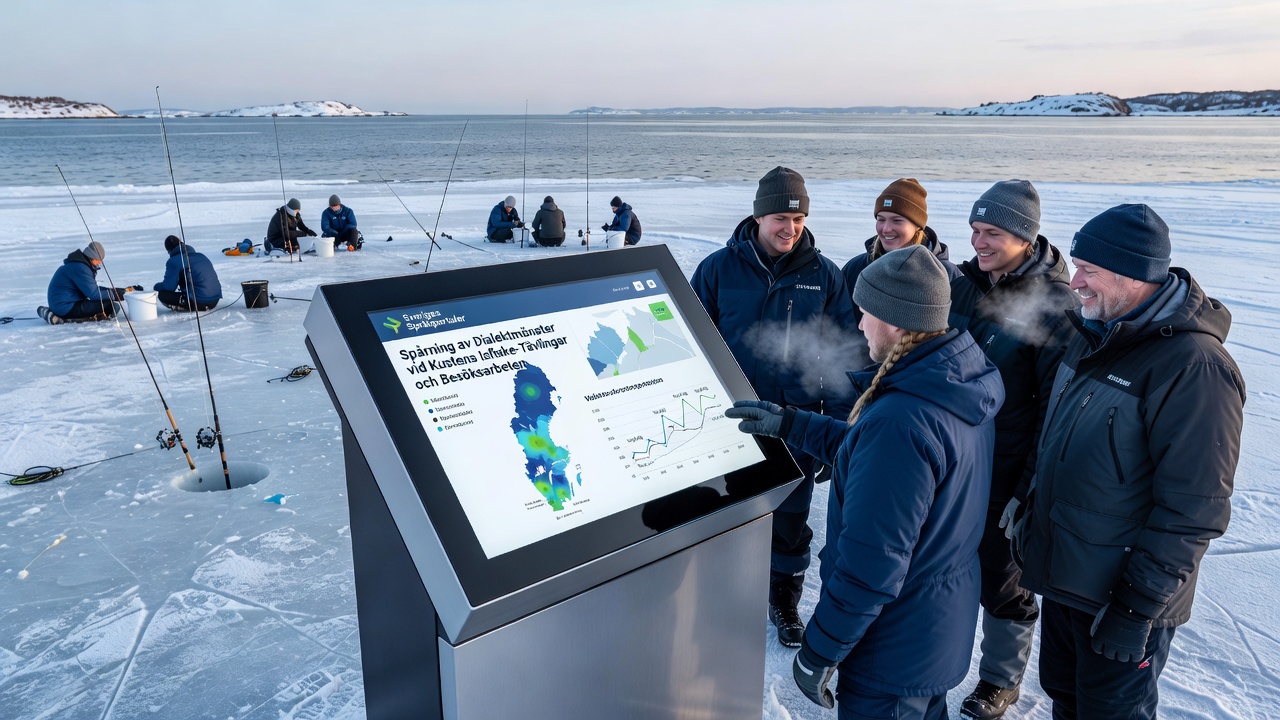
Portal administrators coordinate with local tourism boards to ensure workshop facilitators encourage voluntary contributions, and this collaboration produces datasets that feed into broader studies of language contact in maritime settings. Those who've studied the outputs observe that machine learning models improve classification accuracy when trained on successive years of competition data, particularly for identifying subtle intonation differences that signal geographic origin among speakers.
Role of Digital Archives in October 2026 Developments
Scheduled enhancements to these portals in October 2026 will introduce expanded tagging for workshop-related terminology, incorporating new categories for sustainability discussions that arise during visitor sessions on environmental impacts of ice fishing. This rollout follows integration protocols tested during pilot programs in 2025, where archived materials from previous competitions provided baseline comparisons for tracking shifts in terminology around climate-influenced ice formation. Evidence from academic partnerships shows that such expansions support longitudinal analysis without disrupting ongoing event coverage, as the platforms maintain backward compatibility with earlier audio formats.
Broader Applications and Data Accessibility
Public access interfaces allow educators and cultural researchers to query the collected materials by event type or location, generating reports on how dialect patterns correlate with visitor demographics at workshops held alongside competitions. Industry reports from the European Language Resources Association highlight similar approaches in other Nordic countries, yet Sweden's coastal focus remains distinctive because of the concentrated seasonal window and direct ties to ice-based activities. Links between portal outputs and regional tourism statistics demonstrate that events generating higher linguistic diversity also correlate with increased workshop attendance from domestic and international groups.
Portal operators continue to refine privacy controls that anonymize individual contributions while preserving geographic metadata essential for pattern analysis. This balance enables ongoing documentation of language use in authentic contexts like competitive ice fishing adn instructional workshops, where practical terminology emerges naturally during group interactions and equipment demonstrations.
Conclusion
Sweden's web portals provide structured access to dialect data emerging from coastal ice fishing competitions and visitor workshops, supporting research into regional linguistic dynamics through consistent digital collection and analysis methods. These systems connect event participation with archival records, offering resources that expand understanding of language variation in northern maritime environments while accommodating future updates such as those planned for October 2026.